

Velociraptors are one of the most well-known of the cretaceous dinosaurs, thanks in large part to their appearance in the Jurassic Park franchise. These carnivorous dinosaurs were formidable predators during the Cretaceous period, roaming the Earth over 70 million years ago. We will explore the fascinating world of velociraptors, including their physical characteristics, hunting techniques, and their place in the larger ecosystem of the Cretaceous period.
Jump to:
Physical Characteristics
Velociraptors had a number of unique physical characteristics that set them apart from other dinosaurs. As mentioned earlier, one of their most distinctive features was their long, curved claws on their hind legs. These claws were up to 6 inches long and were used to deliver powerful slashing attacks to their prey.
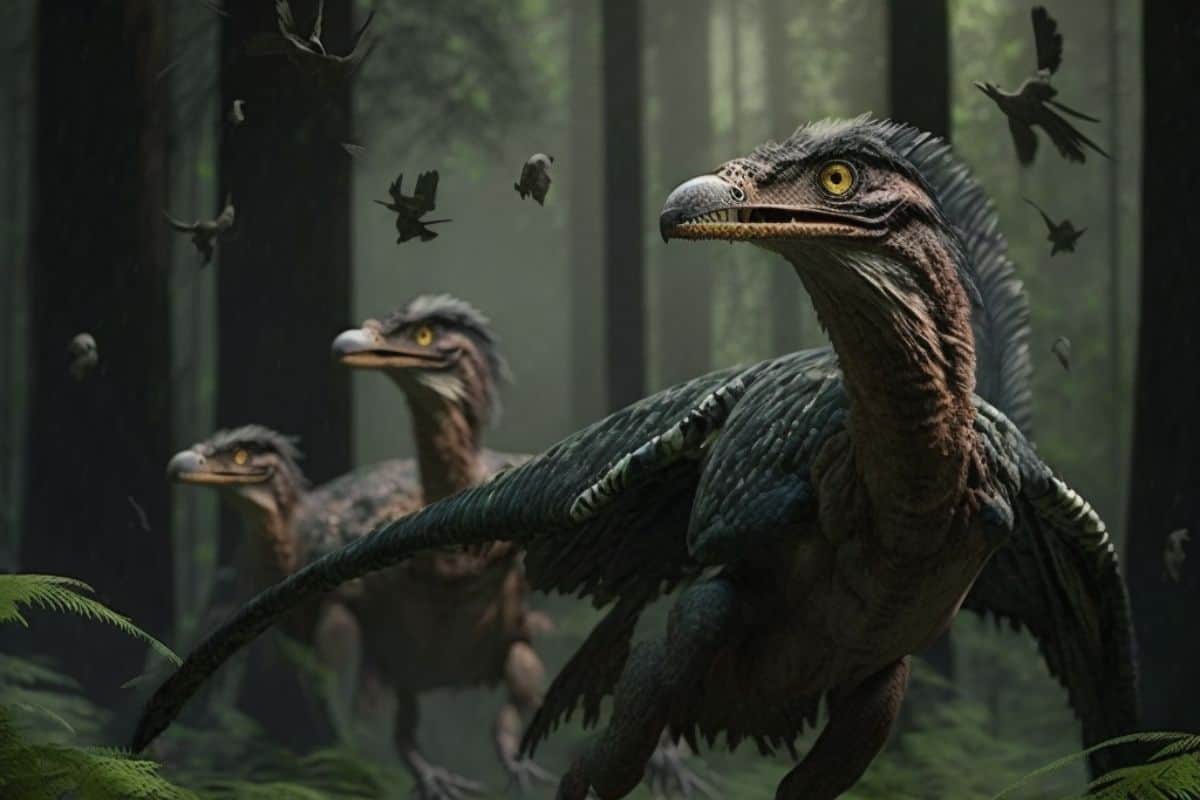
Another notable physical characteristic of velociraptors was their feathers. Recent scientific discoveries have shown that many dinosaurs, including velociraptors, had feathers covering their bodies. These feathers likely served a number of purposes, including providing insulation, helping with camouflage, and aiding in communication and display.
The Velociraptor were also known for their relatively small size. While they were certainly formidable predators, they were much smaller than some of the larger dinosaurs of their time, A typical adult velociraptor was only around 3 to 4 feet tall and weighed about 50 - 100 pounds.
Despite their small size, however, velociraptors were still incredibly agile and quick. They had a slender build, with long, thin legs and a long, stiff tail that helped them maintain balance and control while running. They also had a streamlined head and neck, with a sharp, pointed snout that likely helped them make precise and powerful bites.
Finally, velociraptors had excellent eyesight and hearing, which helped them locate and track their prey. They had large, forward-facing eyes that allowed them to focus on their target and judge distances accurately, and they also had well-developed inner ears that could detect even faint sounds. This combination of physical adaptations made them skilled and efficient hunters, capable of taking down prey much larger than themselves.
Habitat
Velociraptors lived during the late Cretaceous period, which lasted from around 100 to 66 million years ago. They were found in what is now Asia, specifically in Mongolia and China.
During the Cretaceous period, the climate was warm and humid, with a mix of forests, grasslands, and wetlands. The landscape was dominated by ferns, conifers, and flowering plants, and there were many different types of animals living in the region, including other dinosaurs, mammals, and birds.
Velociraptors were well-adapted to this environment, and they likely lived in a variety of habitats, including forests, grasslands, and wetlands. They were able to move quickly through their environment, using their speed and agility to track down prey and avoid predators. They also had excellent eyesight and hearing, which helped them navigate their surroundings and locate prey.
While velociraptors were certainly skilled hunters, they were not at the top of the food chain. They would have faced competition for food and territory from other predators, including larger dinosaurs. They also would have had to contend with environmental factors like flooding and wildfires, which could have disrupted their habitat and food sources.
Overall, velociraptors were well-adapted to the complex and ever-changing ecosystem of the late Cretaceous period. Their physical characteristics, hunting techniques, and social behavior made them one of the most formidable predators of their time.
Hunting Techniques
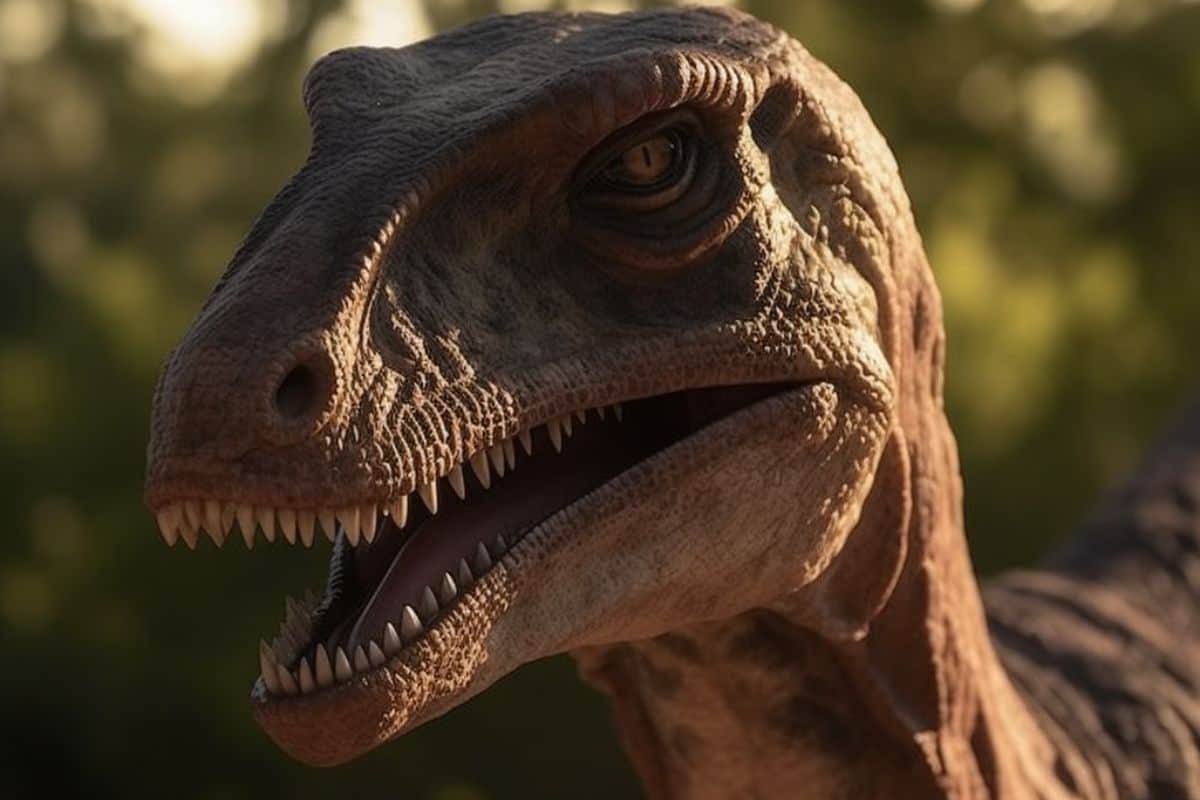
Velociraptors were skilled hunters with a number of unique adaptations that made them particularly effective at capturing their prey. One of their most notable features was their long, curved claws on their hind legs, which were used to deliver powerful slashing attacks to their prey. The claws were capable of slicing through flesh and bone, allowing velociraptors to quickly take down their prey.
In addition to their hind leg claws, velociraptors also had a large, curved claw on each hand. This claw was not as large as the hind leg claws, but it was still a formidable weapon that could be used to deliver swift and precise strikes to their prey. It is believed that the hand claws were used to hold onto struggling prey while the velociraptor delivered the killing blow with its hind leg claws.
Another key adaptation of the velociraptor was their intelligence and social behavior. Velociraptors were pack animals, and they worked together to take down larger prey. They would surround their prey, and then use their speed and agility to take turns attacking and distracting their victim. This strategy allowed them to bring down much larger prey than they could have tackled alone.
Despite their impressive hunting skills, however, velociraptors were not invincible. They would have faced competition for food and territory from other predators, and they themselves could have fallen prey to larger dinosaurs. The complex ecosystem of the Cretaceous period was a brutal and unforgiving place, and even the most skilled hunters like the velociraptor had to fight for survival.

Behavior
Velociraptors were social animals that lived in groups, or packs. They were highly intelligent and are believed to have been among the most intelligent of all dinosaurs.
Within the pack, there was likely a strict hierarchy, with some individuals being dominant over others. This hierarchy would have been based on a variety of factors, including size, strength, and social behavior.
Velociraptors were also skilled communicators, using a variety of vocalizations, visual displays, and body language to communicate with each other. These communication skills would have been important for coordinating group hunts and defending against predators.
In terms of hunting behavior, velociraptors were highly efficient and effective predators. They would work together in groups to take down larger prey, Using their speed, agility, and coordination to surround and attack their target.
Once the prey was immobilized, the velociraptors would use their long, curved hind leg claws to deliver the killing blow. They would then use their sharp teeth and jaws to rip and tear apart their prey, Consuming both the meat and the bones.
While they were certainly skilled hunters, velociraptors were not solely carnivorous. It is believed that they may have also eaten small mammals, birds, and reptiles, as well as insects and other invertebrates.
Overall, velociraptors were social, intelligent, and highly efficient predators. Their unique physical adaptations, hunting techniques, and social behavior made them one of the most formidable and successful predators of their time.
Where can you see the Raptor today
The Velociraptor fossils have been found in several locations around the world, primarily in Mongolia and China.
Some of the most famous velociraptor fossils have been discovered in the Gobi Desert region of Mongolia. Including the first known velociraptor fossil, Which was discovered in 1923. Other important velociraptor fossils have been found in the nearby Chinese province of Inner Mongolia.
In addition to Asia, Velociraptor fossils have also been discovered in North America, Specifically in the western United States and Canada.
Many museums and educational institutions around the world have displays of velociraptor fossils and other dinosaur specimens. Providing an opportunity to see and learn more about these fascinating creatures. Here are some examples of museums with velociraptor fossils on display. Natural History Museum in New York City, Where you can also see a T .Rex Skeleton. The Smithsonian American Museum of Natural History in Washington, D.C.. The Royal Ontario Museum in Toronto, Canada.
11 Velociraptor Facts
- Raptors were not as large as they are often depicted in movies and pop culture. They were actually only about the size of a turkey, weighing around 30 pounds.
- Velociraptors had feathers, which is a characteristic they shared with many other dinosaurs.
- The name "velociraptor" means "swift thief" in Latin, which is a fitting name for a fast and agile predator.
- Raptors had large, sickle-shaped claws on their hind feet, which they used for hunting and killing prey.
- Velociraptors were highly intelligent, with brains that were similar in size to those of modern birds and small mammals.
- It is believed that velociraptors were warm-blooded,
- Which would have allowed them to maintain a high level of activity and aggression.
- While they are often depicted as solitary hunters, velociraptors actually lived in packs, with a complex social structure and hierarchy.
- The feathers of velociraptors were not used for flight, But instead may have served a variety of purposes, including insulation, display, and camouflage.
- Raptors were part of the dromaeosaurid family of dinosaurs, which also includes other famous predators like Deinonychus and Utahraptor.
- Scientists believe that velociraptors may have had a complex vocal system, They may have used a variety of calls and vocalizations to communicate with each other and coordinate group hunts.
More Dinos
FAQs
The raptors portrayed in the Jurassic Park movies are actually based on a related genus of dinosaurs called Deinonychus. Which were larger than velociraptors and lived earlier in the Cretaceous period. However, due to the popularity of the movies, the name "raptor" has become associated with velociraptors in popular culture
Yes, recent discoveries have shown that velociraptors, like many other dinosaurs, had feathers covering their bodies.
Velociraptors were carnivores and ate a diet of meat. They likely preyed on smaller dinosaurs and other animals, including mammals and birds.
No, Velociraptors went extinct millions of years before humans appeared on Earth, So there was no direct interaction between the two species.
Conclusion
Velociraptors were fascinating creatures that dominated the Earth during the Cretaceous period. While they may be best known for their part in Jurassic Park, the real velociraptors were much smaller and more bird like than their movie counterparts. Their hunting techniques and pack behavior made them formidable predators, and their feathers set them apart from many other dinosaurs. While they dont roam the Earth anymore, Their legacy lives on in our imaginations and in the many scientific discoveries that continue to be made about these remarkable creatures.

Leave a Reply