

Triceratops, or Trike meaning three-horned face is a genus of herbivorous ceratopsid dino that walked the earth during the late Cretaceous period, approximately 68-66 million years ago. This iconic dinosaur is one of the most recognizable and popular dinosaurs in the world, and is known by several alternative names including "Trike," "Three-horned Devil" and "Triceratops Horridus."

Jump to:
Physical Characteristics
Triceratops was a massive dinosaur, measuring up to 30 feet in length and weighing up to 9 tons. Its most distinctive features were the three horns on its face, which were used for defense and display, and the bony frill at the back of its head, which may have served to protect its neck from predators. Trikes had a bulky body, short legs, and a broad skull with a beak-like mouth and rows of teeth for chewing tough plant matter.

Habitat and Diet
Habitat
The Trike lived in what is now North America, specifically in the Western interior of the continent. During the late Cretaceous period, this region had a warm and humid climate with a mixture of forests and plains. Triceratops inhabited these areas and may have migrated seasonally to find food.
Diet
Triceratops was a herbivore, and its diet consisted mainly of tough, fibrous vegetation such as ferns and cycads. Trikes had rows of teeth that were adapted for grinding tough plant matter. And its beak-like mouth helped it to strip leaves from plants. Trikes likely ate a variety of plant species. and some scientists believe that it may have had a more varied diet than previously thought. Despite its large size, Triceratops likely spent much of its day eating to maintain its massive bulk.
Behavior
The Trike was a social dinosaur that is believed to have lived in herds for protection against predators such as Tyrannosaurus rex. Fossil evidence has suggested that Triceratops may have migrated in groups, and it is also believed that they may have engaged in ritualized combat with each other for dominance or mating rights.
Triceratops may have also engaged in other social behaviors, such as parental care of young. Some fossil specimens have been found with groups of young individuals, indicating that Triceratops may have had a nurturing side to their behavior.
In addition to social behavior, A Trike also had a defensive behavior. Trikes had three large horns on its face, which were likely used for defense against predators, and its bony frill may have also served as protection for its neck. Overall, Triceratops was a complex dinosaur with a range of behaviors that helped it survive in its environment.

Enemy's
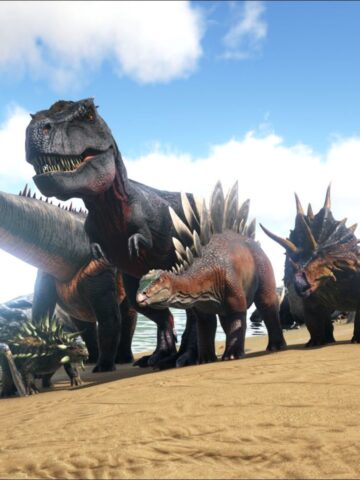
Trikes lived during the Late Cretaceous period. When the ecosystem of North America was dominated by a diverse range of predators. Some of the predators that may have preyed on Triceratops include:
- Tyrannosaurus rex: This was a large theropod dinosaur that lived in the same habitat as Triceratops. Tyrannosaurus rex was one of the apex predators of its time. And is believed to have hunted and killed Trike for food.
- Albertosaurus: This was a smaller theropod dinosaur that also lived during the Late Cretaceous period. It is believed to have preyed on Trikes, along with other large herbivores.
- Dakotaraptor: This was a large raptor dinosaur that lived in the same habitat as Triceratops. Although it was smaller than T .rex. It is believed to have been a swift and agile predator that may have been able to take down Triceratops. Juveniles or weaker individuals.
Overall, Trikes likely faced a range of predators in its environment, including both large and small theropod dinosaurs. Its defensive adaptations, such as its large horns and bony frill, were likely critical for protecting it against these predators.
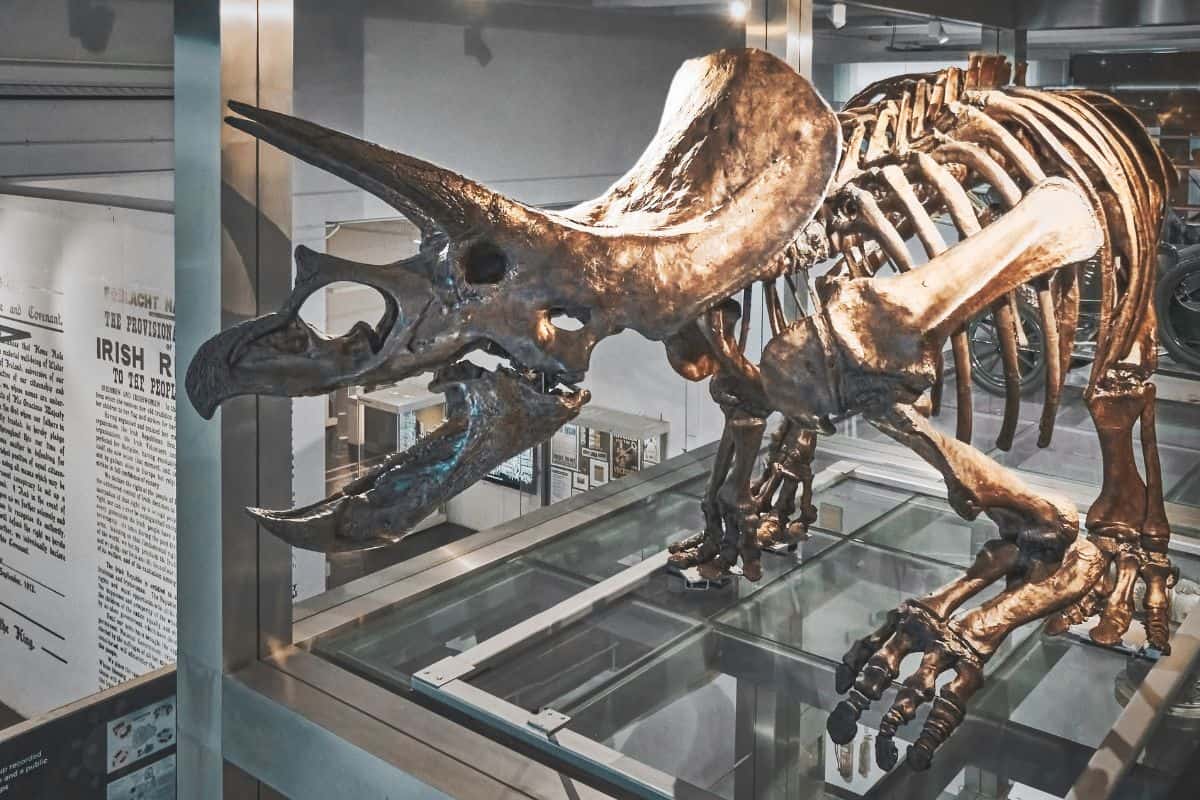
10 facts on Triceratops
- Triceratops was a large, herbivorous dinosaur that lived during the Late Cretaceous period, approximately 68-66 million years ago.
- Its name means "three-horned face," referring to the three horns on its face and the bony frill at the back of its head.
- Triceratops was one of the last non-avian dinosaurs to exist before the mass extinction event at the end of the Cretaceous period.
- It was a social dinosaur that is believed to have lived in herds for protection against predators, and may have migrated seasonally to find food.
- Triceratops was a quadrupedal dinosaur, meaning that it walked on four legs.
- It had a massive skull, measuring up to 8 feet long and weighing about a ton, making it one of the largest skulls of any land animal. And can be seen in the natural history museum in los angeles.
- Triceratops had three large horns on its face, two above its eyes and one on its nose, which may have been used for defense against predators or in intra-species combat during mating season.
- Its bony frill at the back of its head may have served to protect its neck from predators or to regulate its body temperature.
- Triceratops likely ate a variety of tough, fibrous vegetation such as ferns and cycads, and may have spent much of its day eating to maintain its massive bulk.
- Fossil evidence has suggested that Triceratops may have engaged in ritualized combat with each other for dominance or mating rights, and may have had a nurturing side to their behavior, caring for their young in groups.
More Dinos
FAQs
Triceratops fossils have been found in several states in North America, including Montana, Wyoming, South Dakota, and Colorado.
Triceratops went extinct approximately 66 million years ago, at the end of the Cretaceous period.
Triceratops was a herbivore, and its diet consisted mainly of tough, fibrous vegetation such as ferns and cycads.
"Triceratops" comes from the Greek words "tri-" meaning three, "kerat-" meaning horn, and "ops" meaning face. So, the name means "three-horned face.
Conclusion
Triceratops is one of the most famous dinosaurs in the world. And its iconic appearance and fascinating behavior have captured the imagination of people for generations. With its three horns and bony frill, Triceratops was a formidable herbivore. That likely lived in herds for protection against predators. While it went extinct over 66 million years ago. Its fossils continue to provide valuable insights into the history of life on Earth.
Leave a Reply