


Stegosaurus is a genus of armored dinosaur that lived during the Late Jurassic period. Approximately 155 to 145 million years ago. Around the same time as the Diplo. It is one of the most well-known dinosaurs due to its distinctive appearance. Which includes bony plates and spikes along its back, tail, and neck. We'll explore the fascinating features and history of the Stego.
Jump to:
Appearance
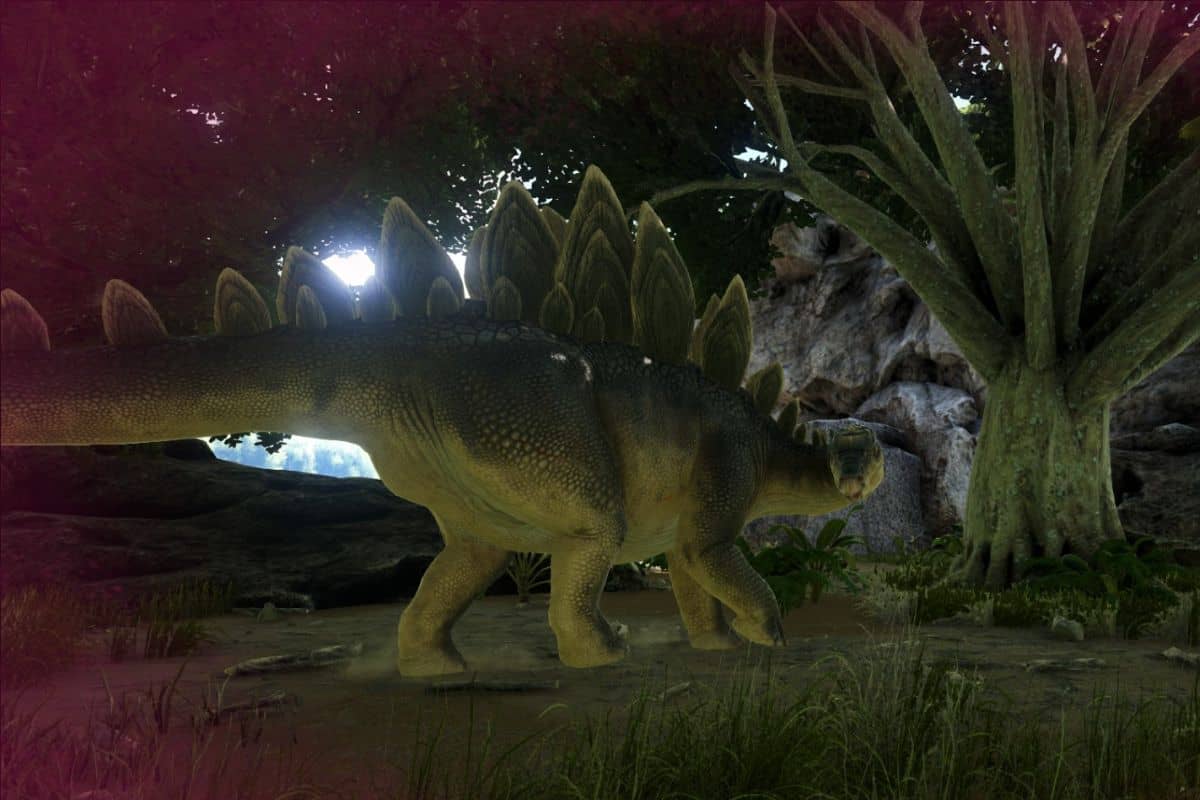
Stegosaurus is perhaps best known for its distinctive appearance, which includes bony plates and spikes along its back, tail, and neck. The most striking feature of the Stego is its back plates. Which were two rows of large, triangular plates that ran down its back. These plates were made of dense bone and were up to 2 feet in length. The plates may have served as a form of armor. Protecting the animal from predators, or they may have been used for thermoregulation. Helping to regulate the animal's body temperature by absorbing or dissipating heat.
The Stego also have bony spikes at the end of its tail, which were used for defense against predators. These spikes were also made of dense bone and could be up to 4 feet in length. In addition, The Stego had smaller spikes along the sides of its neck and back. Which may have provided additional protection.
Despite its impressive armor. Stegos have a relatively small head with a beak-like mouth and small teeth. Suggesting that it may have been a herbivore. It had a relatively short neck and a wide, barrel-shaped body, with four sturdy legs and a short tail. Stegosaurus was a large dinosaur. With some individuals measuring up to 23 feet in length and weighing as much as 7,000 pounds.
Overall, the appearance of the Stego is unlike any other dinosaur. And its bony plates and spikes make it one of the most recognizable and fascinating animals to have ever lived.

Behavior
The Stego is believed to have had a relatively simple diet consisting mainly of fibrous vegetation such as ferns, horsetails, and cycads. It likely spent most of its time foraging for food, using its beak-like mouth to bite off vegetation.
Stegosaurus's are also believed to have been a social animal, living in small family groups. It is thought that these groups may have consisted of a dominant male, several females, and their offspring. The small size of Stegos brain suggests that it may not have had advanced cognitive abilities. But some scientists believe that the social structure of Stegosaurus may have been more complex than previously thought.
Stegosaurus's bony plates and spikes likely served as a deterrent to predators such as Allosaurus. Which lived in the same areas at the same time. These plates and spikes may also have been used for display purposes. With males using their plates to attract mates or intimidate rivals.
Despite its intimidating appearance, The Stego was likely a slow-moving dinosaur, with a heavy body and short legs. This may have made it vulnerable to attacks from faster and more agile predators. So its bony armor was an important adaptation for survival. Overall, the behavior of the Stego is still a subject of active research. New discoveries are shedding light on the fascinating world of this armored dinosaur.
Discovery and Naming
The first Stego fossils were discovered in 1877 by Othniel Charles Marsh, a paleontologist from Yale University. Marsh named the dinosaur Stegosaurus armatus, which means "armed roof lizard," in reference to its bony plates.
The first fossils discovered by Marsh were fragments of the animal's back plates, which he initially thought were part of the animal's roof or armor. Over the next several years, Marsh and his team discovered additional Stegosaurus's fossils, including the distinctive plates and spikes that would later become the dinosaur's signature features.
In addition to the Stego's , Marsh discovered and named many other dinosaurs, including Allosaurus, Brontosaurus, and Triceratops. His expeditions to the American West in the late 19th century were instrumental in the early study of dinosaurs and helped to establish paleontology as a legitimate scientific discipline.
Since its discovery, numerous Stego fossils have been found throughout North America, with some individuals being exceptionally well-preserved. These fossils have allowed scientists to study the anatomy and behavior of Stegosaurus in detail, revealing new insights into this fascinating dinosaur. Today, The Stego remains one of the most iconic and recognizable dinosaurs, and its discovery and naming are an important part of the history of paleontology.
Enemy's
Stegosaurus, like all other dinosaurs, had several natural enemies that it would have had to defend itself against. Some of the potential predators of the Stego during the Late Jurassic period include:
- Allosaurus: This large theropod dinosaur was a contemporary of Stegosaurus and was likely one of its main predators. Allosaurus had a powerful bite and sharp teeth that could have allowed it to attack and kill a Stegosaurus.
- Ceratosaurus: Another large theropod dinosaur that lived alongside Stegosaurus, Ceratosaurus had a powerful skull and jaws that could have allowed it to take down a Stegosaurus.
- Torvosaurus: This large carnivorous dinosaur was one of the apex predators of the Late Jurassic period and may have been capable of taking down a Stegosaurus.
- Marshosaurus: This smaller theropod dinosaur was also a potential predator of Stegosaurus, although it would have had to work harder to take down such a large herbivore.
In addition to these predators, Stegos may have also had to compete with other herbivorous dinosaurs for food and resources. For example, sauropods like Apatosaurus and Diplodocus may have competed with the Stego for access to ferns and other vegetation. However, with its formidable armor and weaponized tail, Stegosaurus was likely able to defend itself against most predators and competitors.
LifeSpan
It is difficult to determine the exact lifespan of Stegosaurus because it is an extinct species and we do not have any direct evidence of its lifespan. However, scientists can make some educated guesses based on the lifespans of other animals with similar lifestyles and anatomy.
Based on studies of modern reptiles and birds, which are the closest living relatives of dinosaurs, it is likely that Stegosaurus had a relatively slow growth rate and a long lifespan. Some scientists estimate that Stegosaurus may have lived for up to 26 years, while others suggest that it could have lived for as long as 35 years.
These estimates are based on the analysis of bone growth patterns and the development of the bony plates and spikes on the back of Stegosaurus, which suggests that it grew slowly and may have had an extended period of growth before reaching maturity.
It is important to note, however, that these estimates are based on indirect evidence and may not accurately reflect the true lifespan of Stegosaurus. The exact lifespan of this fascinating dinosaur remains a mystery, but scientists continue to study it and other dinosaurs to learn more about the biology and behavior of these ancient creatures

Where can Stegos be seen today
Fossils of Stego's have been found in several locations throughout North America, including Colorado, Utah, and Wyoming. Some of the most famous Stegosaurus's fossils have been discovered in the Morrison Formation. A geological formation that dates to the Late Jurassic period and spans across several western states in the United States.
In Colorado, fossils of Stego have been found in the Morrison Formation in areas such as Dinosaur Ridge. Garden Park, and the Cleveland-Lloyd Dinosaur Quarry. And also in Utah. Stegosaurus fossils have been discovered in the Cleveland-Lloyd Dinosaur Quarry. As well as in the city of Moab and other locations. In Wyoming, Stego fossils have been found in the Morrison Formation. In areas such as Como Bluff and the Big Horn Basin.
Many of these fossils are now housed in museums and research institutions around the world. Where they are studied and used to learn more about the biology and behavior of the Stego and other dinosaurs. Some notable museums with Stego fossils on display include. The American Museum of Natural History in New York. The Natural History Museum in London, and the Denver Museum of Nature and Science in Colorado.
Foods
The Stegos was a herbivorous dinosaur, which means that it ate only plants. While we don't have direct evidence of its diet, scientists can make educated guesses based on its anatomy and the types of vegetation that were available during its time period. Some of the plants that Stegosaurus may have eaten include.
- Ferns - Ferns were abundant during the Late Jurassic period and were likely a major part of Stegosaurus' diet. Ferns have fronds that are high in fiber and nutrients, making them a nutritious food source for herbivorous animals.
- Cycads - Cycads were another type of plant that were common during the Late Jurassic period and were likely eaten by Stego. Cycads have tough leaves that are difficult to digest, but they are high in nutrients.
- Horsetails - Horsetails are a type of plant that were common during the Late Jurassic period and were likely eaten by Stego. They have tough, silica-rich stems that would have provided a good source of fiber.
- Conifers - While less common than ferns and cycads, conifers were also present during the Late Jurassic period and would have been a good source of nutrition for the Stego. Conifers have needles and cones that are high in nutrients.
Based on its beak-like mouth and lack of grinding teeth, scientists believe that the Stego may have swallowed its food whole or broken it up into smaller pieces using its beak.
10 facts about the Stegosaurus
- Stegosaurus lived during the Late Jurassic period, around 155 to 145 million years ago.
- Stegosaurus had a distinctive body shape, with a small head, short neck, bulky body, and long, spiked tail.
- One of Stegosaurus' most recognizable features were the bony plates that ran down its back. These plates are believed to have been used for display and defense.
- Stegosaurus had a brain that was relatively small in proportion to its body size, leading some scientists to speculate that it may not have been very intelligent.
- Despite its formidable appearance, Stegosaurus was a herbivore that likely fed on a variety of plant material, including ferns, cycads, and conifers.
- Stegosaurus had a unique way of regulating its body temperature. Its bony plates contained blood vessels that were used to absorb or release heat as needed.
- Scientists are not sure exactly what Stegosaurus' spiked tail was used for, but it is believed to have been a defensive weapon against predators.
- Stegosaurus may have had a social structure, as fossils have been found in groups that suggest herding behavior.
- Some scientists believe that the bony plates on Stegosaurus' back may have been brightly colored and used for display purposes, although this is still a matter of debate.
- Stegosaurus went extinct around 145 million years ago.
More Dinos
FAQs
Stegosaurus lived during the Late Jurassic period, around 155 to 145million years ago.
Stegosaurus was a large dinosaur, with some individuals measuring up to 23 feet in length and weighing as much as 7,000 pounds
Stegosaurus fossils have been found throughout North America, including in Colorado, Utah, and Wyoming
It is believed that Stegosaurus lived in small family groups consisting of a dominant male, several females, and their offspring. However, the social behavior of Stegosaurus is still a subject of research.
Conclusion
Stegosaurus was a fascinating and unique dinosaur that lived during the Late Jurassic period. Around 155 to 145 million years ago. With its distinctive bony plates and spiked tail. Stegosaurus was one of the most easily recognizable dinosaurs of all time. Despite its impressive armor, Stegosaurus was not invulnerable. It would have had to defend itself against several potential predators, including large carnivorous. Dinosaurs like Allosaurus and Ceratosaurus.
Stegosaurus was a herbivore, and while we don't know exactly what it ate. Scientists believe that it likely fed on ferns, cycads, horsetails, and conifers. Its beak-like mouth and lack of grinding teeth. Suggest that Stegosaurus may have swallowed its food whole or broken it up into smaller pieces using its beak. Although Stegosaurus has been extinct for millions of years. It continues to captivate our imaginations and inspire us to learn more about the prehistoric world. The study of Stegosaurus and other dinosaurs has not only given us insights into the biology and behavior of these ancient creatures. But has also helped us to better understand the history of life on Earth and our place within it.

Leave a Reply