

Giganotosaurus, also known as the "giant southern lizard," is one of the largest meat-eating dinosaurs that ever lived. This prehistoric beast roamed the earth during the Late Cretaceous period, about 99 to 95 million years ago. we will explore the fascinating world of Giganotosaurus, including its physical characteristics, habitat, behavior, and more. Skeleton remain can be seen in Fernbank Museum of Natural History.
Jump to:
Physical Characteristics
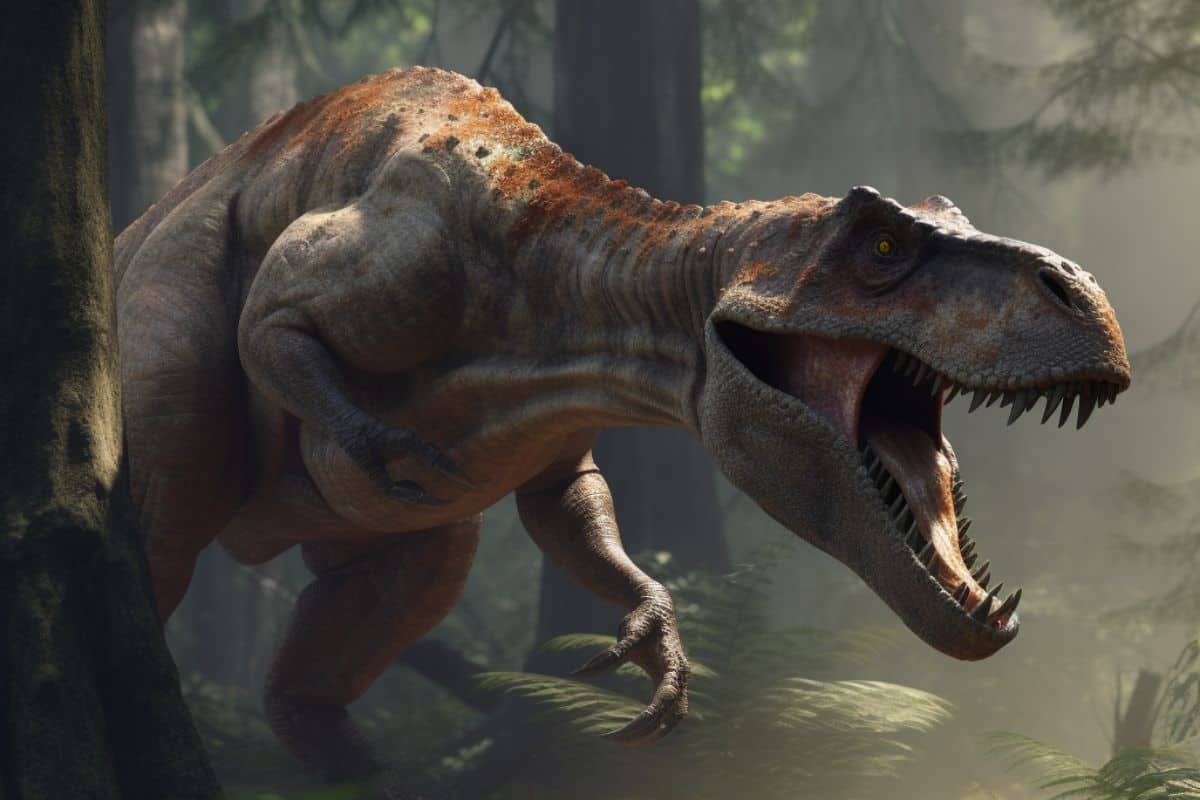
Giganotosaurus was a massive dinosaur, measuring up to 43 feet long and weighing up to 12 tons. It had a long, narrow skull with sharp, serrated teeth up to 8 inches long. Its jaw was extremely powerful, allowing it to bite through bones and crush its prey. Some researchers have found the animal to be larger than T .rex.
The body of Giganotosaurus was well-built and muscular, with a long tail that helped it maintain balance while running. It had short arms with three-fingered hands, which were not very useful in hunting but may have been used for grasping and holding prey.
Habitat
Giganotosaurus lived in what is now Argentina, in the southern part of South America. It inhabited a wide range of environments, including forests, plains, and wetlands. The climate at that time was warm and humid, with frequent rain and thunderstorms.
During the Late Cretaceous period, the area that is now Argentina was part of the southern supercontinent known as Gondwana. This region was situated in a warm and humid climate zone, with frequent rainfall and thunderstorms.
Giganotosaurus lived in what is now known as the Neuquén Basin, an area in western Argentina that was characterized by a variety of different environments. The basin was home to forests, plains, wetlands, and rivers, providing a diverse array of habitats for a wide range of animals.
In the forests, Giganotosaurus may have preyed on smaller dinosaurs, and it may have fed on juvenile sauropod dinosaurs. while in the open plains it may have hunted larger herbivores such as Argentinosaurus. In the wetlands, Giganotosaurus may have preyed on fish, turtles, and other aquatic creatures.

Behavior
Giganotosaurus was a fierce predator, and it likely hunted large herbivorous dinosaurs such as Argentinosaurus. It may have also scavenged on dead animals, as evidenced by the discovery of its teeth marks on the bones of other dinosaurs.
Giganotosaurus was likely a solitary hunter, as there is little evidence of group hunting behavior. It may have also been territorial and aggressive towards other predators. unlike the Velociraptor years after the Giga.
The hunting behavior of Giganotosaurus is still a subject of debate among paleontologists. Some scientists believe that it may have been a pursuit predator, chasing its prey over long distances until it caught up with them. Others think that it may have used stealth and ambush tactics to take down its prey.
Despite its fearsome reputation as a predator, it's likely that Giganotosaurus had to contend with competition from other carnivorous dinosaurs. Some researchers have suggested that Giganotosaurus may have been territorial. And may have engaged in aggressive behavior towards other predators in its environment.
Diet
Based on fossil evidence, it's believed that Giganotosaurus was a carnivorous predator. That fed on other dinosaurs, such as sauropods, ornithopods, and possibly other theropods. Sauropods were likely a common prey item for Giganotosaurus, with some species such as Argentinosaurus. Ornithopods such as Notohypsilophodon may have also been a part of its diet. However, the exact composition of Giganotosaurus' diet is still under investigation. And further research and discoveries may reveal additional information about its feeding habits.

FAQs
Giganotosaurus and Tyrannosaurus rex were both large meat-eating dinosaurs, but they lived in different parts of the world and during different periods of time. They also had some differences in their physical characteristics. Therefore, they are not closely related to each other.
Giganotosaurus was a carnivore and likely fed on a variety of large herbivorous dinosaurs such as Argentinosaurus, and other juvenile saurapod dinosaurs. It may have also scavenged on dead animals.
Giganotosaurus fossils have been found in what is now Argentina, in the southern part of South America. Specifically, they have been found in the Neuquén Basin, an area in western Argentina.
The hunting behavior of Giganotosaurus is still a subject of debate among paleontologists. Some scientists believe that it may have been a pursuit predator, chasing its prey over long distances until it caught up with them. Others think that it may have used stealth and ambush tactics to take down its prey.
10 Facts about Giganotosaurus
- Giganotosaurus was one of the largest carnivorous dinosaurs that ever lived, with estimated lengths of up to 43 feet (13 meters) and weights of up to 12 tons.
- Its name means "giant southern lizard", reflecting the fact that it was discovered in South America.
- Giganotosaurus lived during the Late Cretaceous period, approximately 99-95 million years ago.
- It is believed to have been a formidable predator, with powerful jaws and sharp teeth that could tear through flesh and bone.
- Some studies have suggested that Giga's may have been even larger and more powerful than its famous North American cousin. Tyrannosaurus Rex.
- The Giga had long, slender hindlimbs that allowed it to move quickly and efficiently while hunting or pursuing prey.
- It had short, muscular forelimbs with sharp claws. Which may have been used to grip and hold onto prey during attacks.
- Fossil evidence suggests that Giganotosaurus had a keen sense of smell. With large olfactory bulbs in its brain that would have enabled it to detect and track potential prey from a distance.
- Although the Giga is typically depicted as a solitary hunter.
- Giga's fossils are rare and difficult to find, with only a handful of partial skeletons and isolated bones discovered to date.
Other Dinosaur To look at
Conclusion
Giganotosaurus was a massive and impressive dinosaur that dominated the Late Cretaceous period. With its powerful jaws and sharp teeth, it was one of the largest carnivorous dinosaurs to have ever lived, and its long, slender hindlimbs allowed it to move quickly and efficiently while hunting or pursuing prey. Although its diet is still under investigation, it's believed that Giganotosaurus primarily fed on other dinosaurs, such as sauropods and ornithopods. Despite its rarity in the fossil record, the discovery of the Giga has provided important insights into the diversity and evolution of predatory dinosaurs.

Leave a Reply