

Parasaurolophus, a member of the hadrosaur family, is one of the most recognized dinosaurs due to its unique appearance. With its curved crest on top of its head, it's no wonder why this herbivore is popular among dinosaur enthusiasts. We will explore everything you need to know about Parasaurolophus, including its alternative names, habitat, diet, and behavior.
Jump to:
What is Parasaurolophus?
Parasaur is a genus of herbivorous hadrosaurid dinosaur that lived during the Late Cretaceous Period, approximately 76.9 million years ago. Its name comes from the Greek words "para" meaning "near," "sauros" meaning "lizard," and "lophos" meaning "crest." The name refers to the dinosaur's unique cranial crest, which is elongated and curved backward.
Alternative Names
Parasaur is also commonly known as "para," "parasaur," and "duck-billed dinosaur." The latter name is because of its duck-like bill, which is used to tear and grind up plant matter.
Physical Description
Parasaur was a large herbivorous dinosaur that lived during the Late Cretaceous period, approximately 76.9 to 73 million years ago. It was a member of the Hadrosauridae family, which were also known as "duck-billed" dinosaurs due to their unique head shapes.
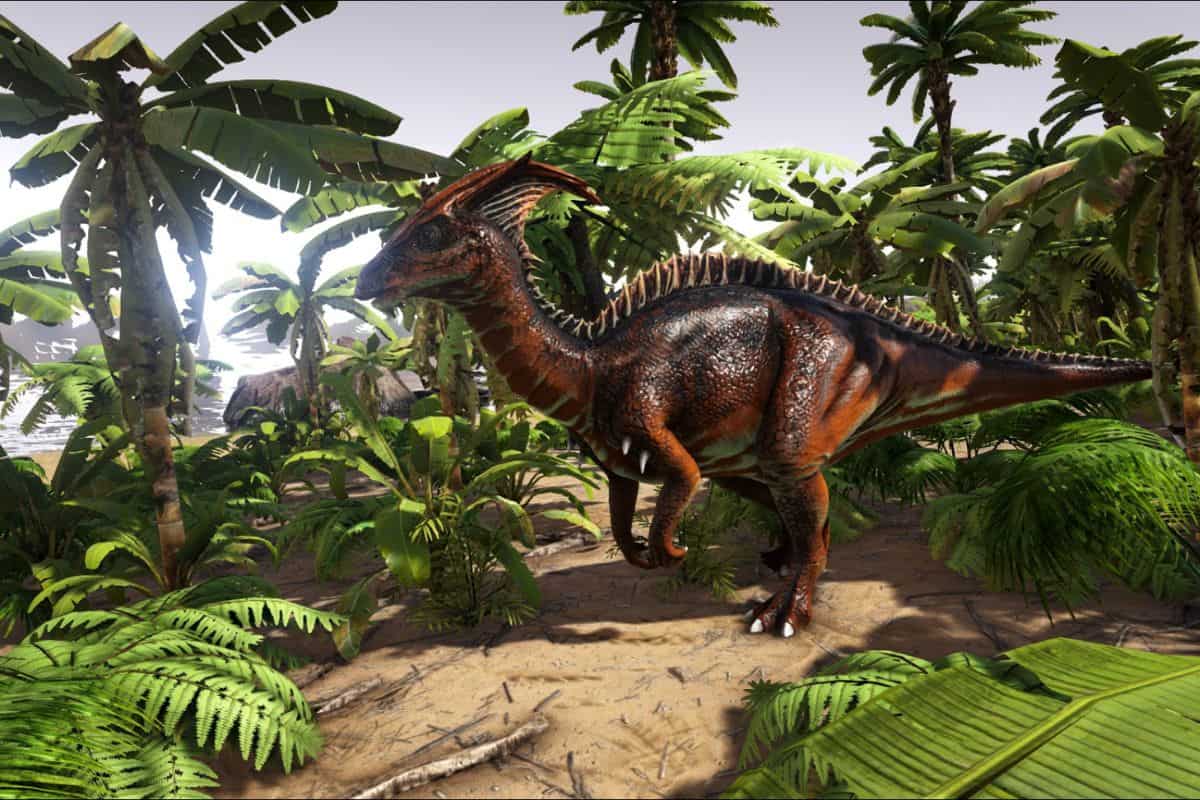
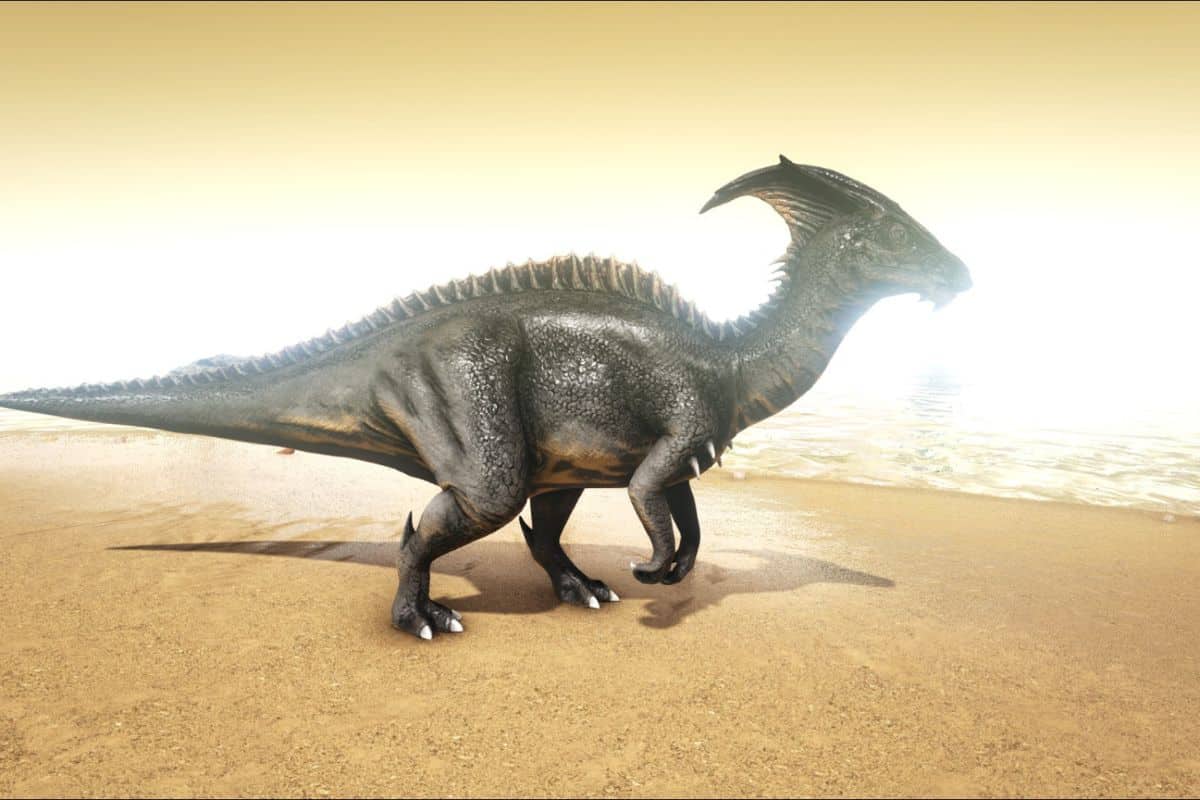
The most distinctive feature of Parasaur was its long, curved crest that extended from the back of its skull. The crest was made of hollow, tube-like structures that extended upward and backward from the nasal passage. It is believed that the crest may have been used for vocalizations, and recent studies suggest that it may have produced low-frequency sounds that could have traveled over long distances. The crest may have also played a role in thermoregulation or sexual selection.
Parasaur had a large body, measuring up to 10 meters (33 feet) in length and weighing up to 2,700 kg. Its limbs were relatively long and slender, and it had four toes on each foot. The front limbs were shorter than the hind limbs, indicating that it was likely bipedal and could walk on two legs.
The dinosaur had a flat, duck-like bill that was used to strip and grind up vegetation. Its teeth were continuously replaced throughout its life, and it had a complex dental structure that allowed it to process tough and fibrous plant matter. The exact composition of its diet is still a subject of scientific study, but it is believed to have included a variety of plants such as ferns, horsetails, and cycads.
Parasaur had a scaly, reptilian skin that was covered in bumpy plates called osteoderms. These plates provided some protection against predators and may have also helped regulate body temperature. Its eyes were located on the sides of its head, providing it with a wide field of vision, and it likely had a good sense of smell and hearing as well.

Habitat
Parasaurolophus lived during the Late Cretaceous period, approximately 76.9 million years ago, in what is now western North America. Fossil evidence suggests that Parasaurolophus inhabited floodplain environments with abundant vegetation, such as swamps, marshes, and river deltas.
During the Late Cretaceous period, much of western North America was covered by a shallow sea, and the coastline was constantly changing due to tectonic activity. The landmasses that existed at the time were characterized by a wide range of habitats, including forests, wetlands, and plains. Parasaur likely lived in habitats that were close to water sources, such as rivers and lakes, where it could find food and water.
The vegetation that existed during the Late Cretaceous period was quite different from what we see today. Plants such as ferns, cycads, and conifers were common, and flowering plants had not yet evolved. Parasaur likely fed on a variety of plants, including ferns, horsetails, and other low-lying vegetation that grew in the wetlands and floodplains where it lived.
Where can bones be found today?
Fossil remains of Parasaurolophus have been found in various locations in western North America, primarily in the United States and Canada. Some of the most significant fossil discoveries have been made in places such as Montana, Utah, New Mexico, and Alberta, Canada.
Today, fossils of Parasaur can be found in museums and research institutions around the world. Some of the most notable museums with Parasaur specimens include the American Museum of Natural History in New York, the Royal Ontario Museum in Canada, and the Natural History Museum of Los Angeles County. These museums and institutions have collected and preserved fossils of Parasaurolophus and other dinosaurs for scientific research, education, and public display.
Natural Enemies
Parasaur likely had several natural enemies, including Daspletosaurus. These predators were at the top of the food chain and may have actively hunted Parasaur and other herbivorous dinosaurs for food.
In addition to large predators, Parasaur may have also been threatened by smaller predators such as velociraptors and dromaeosaurs, which were known for their agility and speed. These smaller predators may have hunted juvenile or sick individuals, as they would have been more vulnerable.
However, Parasaur likely had some defenses against predators. Its herding behavior and the protective crest on its head may have provided some protection against attacks. By living in groups, Parasaur may have been able to better detect and deter predators. The crest may have also been used to produce loud sounds that could have frightened off predators or signaled to other members of the herd to take defensive action.
Diet and Behavior
Parasaur was a herbivore, which means that it primarily ate plants. It had a complex dental structure that allowed it to process tough and fibrous plant matter, and its beak was designed to tear and grind up vegetation. The exact composition of its diet is still a subject of scientific study, but it is believed to have included a variety of plants such as ferns, horsetails, and cycads.
Parasaur likely lived in herds, which is a common behavior among hadrosaurids. Living in groups provided several advantages, including better protection from predators, improved foraging efficiency, and increased chances of finding a mate. The dinosaur's crest may have also played a role in social behavior, as it may have been used for communication among members of the same species. It is believed that the crest may have been used for vocalizations, allowing members of the herd to communicate with each other over long distances.
Overall, Parasaur was a social and herbivorous dinosaur that lived in a floodplain environment with plenty of vegetation. Its complex dental structure and beak allowed it to process tough plant matter, and its crest may have played a role in communication and social behavior within its herd.
10 Facts on Parasaur
- Parasaurolophus was a large herbivorous dinosaur that lived during the Late Cretaceous period, approximately 76.9 to 73 million years ago.
- The name "Parasaurolophus" means "near crested lizard" in Greek. Referring to the dinosaur's close relationship to other crested hadrosaurids and its distinctive cranial crest.
- Parasaurolophus was a member of the Hadrosauridae family. Which were also known as "duck-billed" dinosaurs due to their unique head shapes.
- The most distinctive feature of Parasaurolophus was its long, curved crest that extended from the back of its skull. The crest was made of hollow, tube-like structures that may have been used for vocalizations and communication.
- Parasaurolophus had a large body, measuring up to 10 meters (33 feet) in length. And weighing up to 2,700 kg (6,000 lbs).
- The dinosaur had a flat, duck-like bill that was used to strip and grind up vegetation. Its teeth were continuously replaced throughout its life. And it had a complex dental structure that allowed it to process tough and fibrous plant matter.
- Parasaurolophus likely lived in herds, which would have provided some protection against predators. The crest on its head may have also played a role in thermoregulation or sexual selection.
- Fossil remains of Parasaurolophus have been found in various locations in western North America. Primarily in the United States and Canada. Some of the most significant fossil discoveries have been made in places such as Montana. Utah, New Mexico, and Alberta, Canada.
- Parasaurolophus likely had several natural enemies, including large carnivorous dinosaurs such as velociraptors Daspletosaurus. Its herding behavior and protective crest may have provided some defense against predators.
- Parasaurolophus is one of the most well-known and popular dinosaurs due to its unique appearance and distinctive crest. It has been featured in numerous books, movies, and other media, and is a favorite of many dinosaur enthusiasts.
More Dinos
FAQs
Parasaurolophus was a large dinosaur, measuring up to 10 meters (33 feet) in length and weighing up to 2,700 kg (6,000 lbs).
Parasaurolophus was a herbivore, which means that it primarily ate plants. Its diet likely included a variety of plants such as ferns, horsetails, and cycads.
Fossil remains of Parasaurolophus have been found in various locations in western North America, primarily in the United States and Canada. Some of the most significant fossil discoveries have been made in places such as Montana, Utah, New Mexico, and Alberta, Canada.
Parasaur likely had several predators, Daspletosaurus, Velociraptors and possibly other large carnivorous dinosaurs. Its herding behavior and protective crest may have provided some defense against predators.
Conclusion
Parasaur is a unique and iconic dinosaur that continues to captivate the imagination of people of all ages. Its curved crest, duck-like bill, and massive size make it one of the most recognizable dinosaurs in popular culture. Although it lived millions of years ago. we can learn a great deal about its habitat, diet, and behavior. Through the fossil record. With ongoing scientific research and new discoveries. We may continue to uncover new information about this fascinating dinosaur in the years to come.

Leave a Reply